Book Appointment Now


STI Screening Schedule by Age: CDC Recommendations
CDC STI screening schedule by age for women: what to test for, when to start, and how often — evidence-based guidance including women who have sex with women.
Most STIs don’t announce themselves. Chlamydia rarely causes symptoms. Early syphilis can look like nothing. HPV infects cervical tissue for years before any cellular change shows up on imaging. That silence is the entire reason routine screening exists, and it’s why the CDC publishes age-specific screening recommendations rather than leaving the decision to symptom awareness alone.
The schedule isn’t complicated once you see it laid out by age group and infection type. It accounts for where infection rates peak, how different pathogens behave over time, and which interventions have proven, population-level impact on preventing long-term complications. The guidelines are built on surveillance data and clinical trial evidence, not caution for its own sake.
At Lesbian STD, the mission is evidence-based sexual health education for women, including women who have sex with women, a group that is routinely underscreened because providers underestimate same-sex transmission risk. That underestimation is not supported by the data. This post covers the full CDC-recommended screening schedule, what each test involves, and how to know when the standard recommendations need to be adjusted for your situation.

What Is STI Screening, and How Is It Different From Getting Tested for Symptoms?
Screening means testing on a routine schedule when you have no symptoms, specifically to catch infections in the window between acquisition and clinical presentation. Diagnostic testing happens when a symptom drives the visit. Both matter, but they serve different purposes. Screening is what prevents a silent infection from becoming a serious complication.
The scientific basis for the CDC’s recommendations comes from decades of epidemiological surveillance and controlled research. The CDC’s 2021 STI Treatment Guidelines synthesize randomized trial data, cost-effectiveness analyses, and population-level infection trends to determine which tests, at which intervals, produce the best outcomes. They’re not arbitrary benchmarks. They represent the point at which screening yield justifies the clinical effort and patient burden involved.
“Routine screening for chlamydia is recommended annually for all sexually active women younger than 25 years, as well as for older women who are at increased risk for infection.”
Jenna Hardy, whose work on sexual and reproductive health is grounded in medical and public health expertise, frames screening as information gathering rather than a response to risk behavior. Your status is a fact about your body. Knowing it is the baseline for every informed decision that follows.
Which STIs Does the CDC Recommend Screening For?
Routine screening doesn’t mean testing for everything on the same schedule. The CDC prioritizes infections where early detection changes outcomes, and where prevalence is high enough to justify universal or near-universal testing. For women, the core list looks like this:
- Chlamydia — annually for all sexually active women under 25; at least annually for women 25 and older with new or multiple partners or other risk factors
- Gonorrhea — same cadence as chlamydia; co-testing is standard because co-infection is common and the pathogens share transmission routes
- Syphilis — recommended for all pregnant women at first prenatal visit; for non-pregnant women, based on risk assessment including partner history, geographic prevalence, and prior STI diagnoses
- HIV — at least once for all adults ages 13 to 64 as part of routine healthcare; annually for those with ongoing risk factors
- Hepatitis C — universal one-time screening for adults born between 1945 and 1965; more frequent testing for people with injection drug use history or other exposures
- Hepatitis B — recommended for unvaccinated adults and those with specific exposure histories
- HPV and cervical cancer via Pap smear — cytology starting at age 21 regardless of sexual history; HPV co-testing added at age 30
This list matters specifically for women who have sex with women. Chlamydia, gonorrhea, HPV, herpes, syphilis, and bacterial vaginosis all transmit through female-to-female contact. The sexual health resources at lesbianstd.com document these transmission routes clearly, so both patients and providers can build accurate risk pictures rather than relying on outdated assumptions about who “needs” testing.
How Does the CDC Structure Screening by Age Group?
The age bands in the guidelines aren’t arbitrary. Infection rates peak in younger populations, and the clinical priorities shift meaningfully with life stage. Here’s how the schedule breaks down in practice:
Under 25: Annual chlamydia and gonorrhea testing is the default for all sexually active women in this group. No additional risk stratification required. Prevalence is high enough to justify universal screening. HIV testing should happen at least once, more often with ongoing risk. Pap smear begins at age 21 with cytology only, no HPV co-test at this stage, because HPV acquisition and clearance patterns in younger cervical tissue make co-testing less clinically useful before 30.
Ages 25 to 64: Chlamydia and gonorrhea move from universal to risk-based screening. Risk factors include new or multiple partners, a partner who has concurrent partners, history of prior STIs, inconsistent condom use, or exchange of sex for goods. At 30, the preferred cervical cancer screening strategy becomes Pap plus HPV co-test every five years, or Pap alone every three years. HIV annual testing continues for those at ongoing risk. Syphilis screening at this stage is driven by clinical and behavioral assessment rather than age alone.
During pregnancy: Screening intensity increases across the board. CDC guidelines recommend chlamydia, gonorrhea, syphilis, HIV, and hepatitis B at the first prenatal visit for all pregnant women. Syphilis and HIV repeat in the third trimester for women with elevated risk. Hepatitis C screening is now recommended universally in every pregnancy regardless of risk factors.

Does the Standard Schedule Apply to Everyone, or Are There Exceptions?
The age-based schedule is a floor, not a ceiling. It reflects what the data supports for the general population. Several groups need a more tailored approach, and honest clinical guidance acknowledges this rather than forcing everyone into the same box.
- Women with multiple recent partners — chlamydia, gonorrhea, and syphilis testing more frequently than annually during active periods
- Women who use injection drugs or have a partner who does — HIV, hepatitis B, and hepatitis C at minimum annually, more frequently with ongoing exposure
- Women living with HIV — co-infection monitoring is more intensive; gonorrhea and chlamydia testing at every visit rather than annually
- Women in high-prevalence areas — syphilis rates have surged nationally, particularly in the South and West; geography is a legitimate risk factor
- Immunocompromised women — HPV-related disease can progress faster; more frequent cervical screening may be clinically appropriate
- Women with prior abnormal Pap or HPV-positive results — individualized follow-up intervals based on colposcopy findings, not the standard three- or five-year cycle
Women who have never been sexually active may reasonably defer some screenings, but this should still involve a provider conversation rather than a blanket assumption. The cervical screening start age of 21 isn’t tied to sexual debut. It reflects the natural course of HPV exposure and clearance in younger cervical tissue. The guideline applies regardless of sexual history.
What Should You Expect From a Screening Visit, and How Long Until You Have Results?
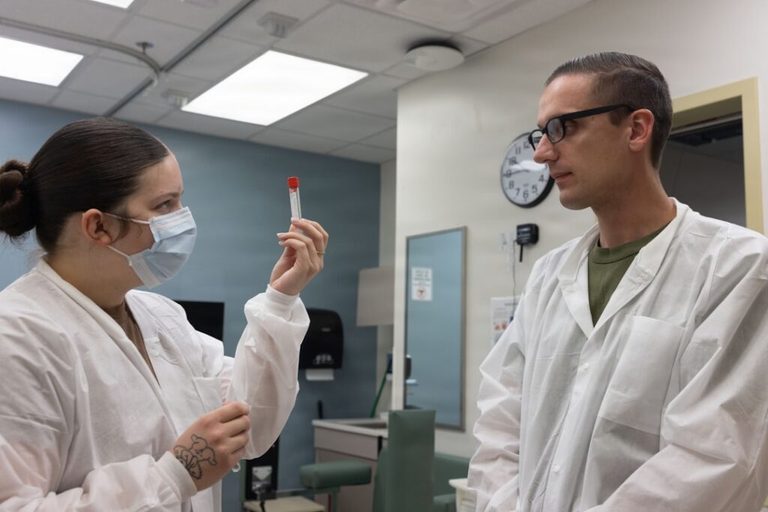
Most STI screenings are faster and less invasive than people expect. Chlamydia and gonorrhea are diagnosed via urine sample or self-collected vaginal swab. No speculum needed unless symptoms are present. HIV can be tested through a blood draw or oral swab, with rapid tests returning results in 20 minutes. Syphilis and hepatitis require blood draws. A Pap smear involves a brief speculum exam and cervical cell collection that takes under two minutes.
NAAT testing for chlamydia and gonorrhea returns results in two to five business days. Pap cytology takes one to two weeks. If results come back positive for a bacterial infection, the treatment timeline is short. Chlamydia and gonorrhea both clear with a single antibiotic course. Early-stage syphilis responds to one penicillin injection. Viral infections require different management, but early detection still meaningfully changes outcomes for conditions like hepatitis B and C.
“Untreated STIs can lead to serious complications including pelvic inflammatory disease, infertility, and increased susceptibility to HIV — underscoring the importance of routine screening even in the absence of symptoms.”
Providers working in women’s sexual health see this pattern consistently: patients who screen annually have markedly lower rates of pelvic inflammatory disease and other chlamydia-related complications than patients who only test in response to symptoms. The evidence supports what the CDC encodes in its guidelines. Early detection followed by prompt treatment protects long-term reproductive and systemic health in ways that symptomatic diagnosis simply can’t replicate.
How Do You Build Screening Into Your Routine Without It Falling Through the Cracks?
Guidelines are useful only if they’re acted on. Here are six concrete ways to stay current:
- Anchor STI screening to an existing annual visit. Most people already have one annual appointment. Adding STI tests to that visit removes the need to schedule a separate one and keeps records in one place.
- Think through your risk profile before the appointment. Number of partners in the past year, condom consistency, any new symptoms. This makes the conversation with your provider efficient and the testing panel accurate.
- Ask explicitly for the tests you want. Providers don’t always screen at extragenital sites (throat, rectum) without being asked, even when a patient’s sexual practices make those sites relevant. Name what you need.
- Set a six-month reminder during higher-risk periods. Annual testing is appropriate for lower-risk periods. Semi-annual testing makes sense when you’re in a window of multiple new partners or other elevated exposure.
- Track your Pap and HPV co-test dates separately. Three- and five-year intervals are easy to lose track of. Note the date, result, and recommended follow-up interval somewhere you’ll find it.
- Don’t skip screening because you feel well. Asymptomatic transmission windows exist specifically because infections can circulate without any signal to the person carrying them. Absence of symptoms is not the same as a negative test.
For deeper reading on any specific infection covered here, including transmission routes relevant to women who have sex with women and clinical detail on diagnostic methods, the sexual health education resources at lesbianstd.com cover each condition thoroughly. The site’s content is medically reviewed and research-based. For information on the terms governing use of the educational content published there, the terms of service outlines those clearly.
The CDC’s STI screening schedule gives you a clear, evidence-based map. It tells you what to test for, when to start, and how often to repeat. The only thing that activates it is scheduling the visit, asking for the right panel, and getting the results. That’s the entire protocol. Simple to describe, important to actually do.