Book Appointment Now


Pap Smear Explained: What Happens and Why It Matters
Understand the Pap smear: what it is, why it's vital for women's sexual health, screening guidelines, and what to expect from your results for cervical cancer prevention.
Navigating women’s sexual health can feel complex, with many essential screenings often discussed in hushed tones or medical jargon. One of the most crucial tools for preventative care in reproductive health is the Pap smear. It’s a simple, yet profoundly impactful, test designed to detect changes in cervical cells before they become cancerous. Understanding what a Pap smear entails and why it’s so important empowers you to take charge of your well-being.
For many women, particularly those who have sex with women, questions about who needs a Pap smear, how often, and what the results mean are common. We’re here to demystify this vital screening, providing clear, evidence-based information so you can make informed decisions about your health. At Lesbian STD, our mission is to offer medically reviewed, research-based content to guide you through your sexual and reproductive health journey. Learn more about our approach to women’s sexual health on our homepage.
This discussion will cover the essentials of the Pap smear, from its purpose to what happens during the procedure and how to interpret your results, ensuring you feel confident and prepared for this routine but important aspect of care.
What Is a Pap Smear and Why Does It Matter?
A Pap smear, also known as a Pap test or cervical smear, is a screening procedure for cervical cancer. It involves collecting cells from your cervix, the narrow end of your uterus at the top of your vagina, to look for abnormal changes that could indicate precancerous or cancerous conditions. This test is a cornerstone of preventative health, catching potential issues early when treatment is most effective.
The Pap smear is an indispensable tool in women’s health. It doesn’t diagnose cancer directly but identifies cellular changes that, if left untreated, could progress to cancer. This early detection is why regular screening significantly reduces the incidence of and mortality from cervical cancer. In our practice, we’ve seen how adherence to screening guidelines directly translates to better health outcomes for women.
“Cervical cancer screening, through tests like the Pap test and HPV test, helps detect abnormal cells before they become cancerous. Finding and treating these changes early can prevent cancer.”
Do You Need a Pap Smear If Not Sexually Active?
Generally, current guidelines recommend Pap smears for women aged 21 and older, regardless of sexual activity status, due to the potential for HPV exposure through non-penetrative contact or past sexual encounters. However, individual risk factors and a thorough discussion with your healthcare provider will determine the most appropriate screening schedule for you.
While human papillomavirus (HPV) is the primary cause of cervical cancer, and it’s most commonly spread through sexual contact, it’s not the only factor. Women who have never been sexually active may still develop cervical cancer, though it’s rare. Moreover, “sexual activity” is a broad term, and HPV can be transmitted through skin-to-skin contact in the genital area, even without intercourse. Board-certified providers recommend discussing your complete sexual history, including any non-penetrative contact, with your doctor to establish the most appropriate screening regimen. Jenna Hardy, the primary author and voice of Lesbian STD, emphasizes that clear, neutral language in these conversations enables informed decisions.

Understanding the Pap Smear Procedure
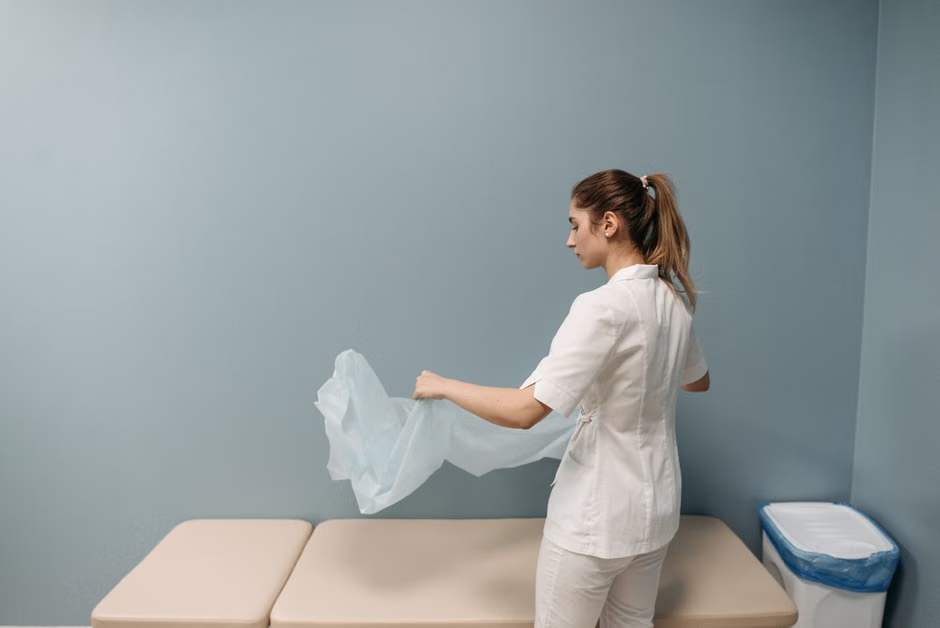
The Pap smear procedure is a quick outpatient test performed during a gynecological exam. You’ll lie on an examination table with your feet in stirrups. Your healthcare provider will gently insert a speculum into your vagina to hold the vaginal walls apart and visualize your cervix. Then, they use a small brush or spatula to collect cells from the surface of your cervix and the cervical canal. These cells are sent to a lab for microscopic examination.
Many women worry about discomfort during the procedure. While you might feel some pressure or a brief cramp when the cells are collected, it’s typically not painful. Communication with your provider is key; don’t hesitate to voice any concerns or discomfort you experience. The entire process usually takes only a few minutes, and its benefits far outweigh any temporary mild discomfort. Pro tip: To ensure accurate results, avoid douching, using vaginal medicines, or having sex for at least 24-48 hours before your Pap smear appointment.
What Happens If You Never Get a Pap Smear?
If you never get a Pap smear, you miss the opportunity for early detection of precancerous cervical cell changes, significantly increasing your risk of developing cervical cancer. Without regular screening, these abnormal cells can progress silently over many years into invasive cancer, which is much harder to treat effectively.
Missing out on Pap smears means you’re foregoing one of the most effective tools for preventing a potentially life-threatening disease. Cervical cancer often presents with no symptoms in its early stages. By the time symptoms like abnormal bleeding, pelvic pain, or pain during sex appear, the cancer may have advanced, making treatment more complex and less successful. This is why specific screening ages and frequencies are so important. Our clinical practice supports the CDC’s recommendations for routine screening to reduce complications up to 90 percent when accompanied by treatment.
What Can a Pap Smear Detect?
A Pap smear primarily detects abnormal cells on the cervix that could be precancerous or cancerous. It can also sometimes reveal other conditions:
- **Atypical Squamous Cells of Undetermined Significance (ASCUS):** Cells that look slightly abnormal but aren’t clearly precancerous.
- **Low-Grade Squamous Intraepithelial Lesion (LSIL):** Mildly abnormal cell changes, often caused by HPV, that may go away on their own.
- **High-Grade Squamous Intraepithelial Lesion (HSIL):** More significant abnormal changes that are considered precancerous and require further investigation.
- **Adenocarcinoma In Situ (AIS):** Precancerous glandular cells that could develop into adenocarcinoma.
- **Cervical Cancer:** The presence of invasive cancerous cells.
- **Inflammation or Infection:** While not its primary purpose, a Pap smear can sometimes indicate general inflammation or the presence of certain infections, though specific tests are needed for diagnosis.
Interpreting Your Pap Smear Test Results
Pap smear results are usually categorized as normal, unclear, or abnormal. A normal result means no abnormal cells were found. An unclear result (like ASCUS) suggests some atypical cells but doesn’t definitively indicate a problem, often requiring repeat testing. An abnormal result indicates precancerous or cancerous cells are present, necessitating further evaluation such as a colposcopy or HPV testing.
Receiving an abnormal Pap smear result can be concerning, but it’s important to remember that it often doesn’t mean you have cancer. Most abnormal results indicate minor cell changes, often caused by HPV, that may resolve on their own or can be easily treated. Your healthcare provider will guide you through the next steps, which might include further testing like an HPV test, a repeat Pap smear in a few months, or a colposcopy, where your doctor examines your cervix with a magnifying device. According to the Mayo Clinic, understanding these results and following up are crucial for preventing cervical cancer.

Who Needs a Pap Smear and What Are the Guidelines?
The general guidelines for Pap smear screening are designed to offer optimal protection while avoiding unnecessary procedures. The specific recommendations can vary slightly between organizations, but broadly, they are as follows:
- **Age 21-29:** Pap test alone every 3 years.
- **Age 30-65:** Pap test and HPV test (co-testing) every 5 years, or Pap test alone every 3 years.
- **Over 65:** Most women can stop screening if they’ve had regular negative screenings for many years and no history of serious cervical lesions.
- **After Hysterectomy:** If your cervix was removed as part of a total hysterectomy for non-cancerous reasons, and you have no history of moderate or severe cervical cell changes, you typically don’t need Pap tests.
These guidelines are for individuals with an average risk. If you have specific risk factors, such as a history of precancerous lesions, HIV infection, or a weakened immune system, your doctor might recommend more frequent screening. We’re committed to providing the kind of evidence-based information that helps you understand these nuances. Our team, comprised of medical and public health professionals, applies its expertise in infectious diseases and women’s health to inform these recommendations.
“For women aged 30 to 65, co-testing with both the Pap test and the HPV test every 5 years is the preferred screening strategy. This approach offers the most effective detection of cervical abnormalities.”
— Journal of Infectious Diseases, referencing ACOG guidelines
Practical Tips for a Smooth Pap Smear Experience
Feeling prepared can make your Pap smear experience more comfortable and less anxiety-inducing. Here are some practical tips:
- **Schedule Smart:** If possible, schedule your Pap smear when you are not menstruating. While some clinics can perform the test during a light period, it’s generally best to avoid it to ensure the clearest results.
- **Avoid Vaginal Products:** For 24-48 hours before your appointment, avoid douching, using vaginal creams, suppositories, or spermicides, as these can wash away or obscure cervical cells.
- **Refrain from Intercourse:** Avoid sexual intercourse for 24-48 hours before your test. Semen can interfere with the results.
- **Communicate:** Talk to your healthcare provider about any anxieties, discomfort, or questions you have. They can explain each step and help you relax.
- **Breathe:** Deep breathing exercises can help manage discomfort or nervousness during the procedure.
- **Know Your History:** Be ready to discuss your medical history, including previous abnormal Pap results, HPV status, and sexual health. This context helps your provider tailor your care.
Action: Always confirm your specific screening needs and prepare accordingly by checking our terms of service for information on appointment preparation or calling your clinic directly.
Understanding the Pap smear is a critical step in empowering yourself with sexual health autonomy. Regular screenings, aligned with expert guidelines, are your best defense against cervical cancer. Don’t let fear or misinformation keep you from this vital preventative measure. We encourage all women to prioritize their regular health check-ups and open communication with their healthcare providers. Your health is a continuous journey, and staying informed is the most powerful tool you have. For more information about women’s sexual health and to schedule an appointment, visit us at Lesbian STD.