Book Appointment Now


Annual STI Screening for Sexually Active Women: Why It Matters
Annual STI screening for sexually active women catches silent infections early, reduces complications by up to 90%, and keeps you in control of your reproductive health.
Most sexually transmitted infections don’t announce themselves. No rash, no pain, no obvious sign that anything is wrong. Chlamydia goes undetected in roughly 70% of women who carry it. Syphilis can stay silent for months. HPV, the most common STI in the United States, often clears without symptoms, but certain strains cause cervical changes that build quietly toward cancer. Waiting for symptoms to appear before getting tested isn’t a strategy. It’s a gap.
Annual STI screening changes that equation. It moves you from reactive to proactive, replacing uncertainty with information you can actually use. Early detection doesn’t just protect your health, it reduces your risk of serious complications, including pelvic inflammatory disease, infertility, and certain cancers, by catching infections before they progress. According to the CDC, regular STI screening is one of the most effective tools in reducing transmission and long-term health consequences across all sexually active populations.
Evidence-based sexual health education, like the kind published here at LesbianSTD.com, exists precisely because too many women leave clinical encounters without complete information. That includes women who have sex with women, a population often undertested and underserved by standard screening protocols. Understanding what annual screening involves, and why it matters for you specifically, is the first step toward real health autonomy. You can also read understanding sexual health screening for women for a broader look at how these protocols are designed.

What Annual STI Screening Actually Means
Annual STI screening refers to routine laboratory testing performed once a year, or more frequently depending on your risk factors, to detect sexually transmitted infections regardless of whether symptoms are present. It’s distinct from testing prompted by a specific concern. The goal is surveillance: catching infections in their silent phase, when treatment is most effective and transmission risk is highest.
The tests included in a screening visit depend on your age, sexual behavior, number of partners, and prior history. A standard panel for women typically covers chlamydia and gonorrhea via a urine sample or cervical/vaginal swab, syphilis via a blood draw, HIV via a blood or oral fluid test, and hepatitis B and C depending on exposure history. Pap smears, which detect cervical changes linked to HPV, are part of cervical cancer screening rather than STI screening per se, but they’re often coordinated at the same visit.
“Sexually transmitted infections are a major public health challenge. Many infections are asymptomatic, meaning people don’t know they’re infected and may unknowingly pass infections to partners.”
Why Is It Important to Get Tested Regularly if You’re Sexually Active?
Regular testing is important because most STIs produce no symptoms, meaning you can carry and transmit an infection without knowing it. Screening breaks that chain. It protects your health, informs your partners, and prevents the downstream complications, like PID, infertility, or cervical cancer, that develop only when infections go untreated for months or years.
Beyond the clinical rationale, there’s a practical one. Treatment for infections like chlamydia or syphilis, when caught early, is typically a short course of antibiotics. Treatment for the complications of those same infections, if they’re left to progress, is far more involved. Early detection genuinely reduces complications by up to 90% when followed by timely treatment. That’s not a hypothetical, it’s what the data consistently show.
Jenna Hardy, the author and primary voice of this site, has written extensively about how women who have sex with women face specific gaps in screening, including providers who assume low STI risk based on partner gender rather than actual behavior. Risk assessment has to be individualized. It can’t be assumed.
Should You Test for STDs Every Year as a Woman?
Yes, most sexually active women should be tested at least once a year. The CDC recommends annual chlamydia and gonorrhea testing for all sexually active women under 25, and for women 25 and older with new or multiple partners. HIV screening is recommended at least once for everyone aged 13 to 64, with annual retesting for those at higher risk.
Women who have sex with women sometimes hear that they don’t need routine STI screening, but that’s not accurate. Bacterial vaginosis, HPV, herpes, syphilis, and trichomoniasis can all be transmitted through woman-to-woman sexual contact. Annual screening is appropriate, and in some cases, more frequent testing is warranted based on number of partners and specific practices. A provider who understands WSW transmission routes is essential. If yours doesn’t, advocating for complete screening is within your rights as a patient.
How Often Should Sexually Active People Get Tested for STIs?
The general rule is at least once a year for sexually active women. More frequent testing, every three to six months, is recommended if you have multiple partners, a new partner whose testing history is unknown, or a recent STI diagnosis. Pregnant women should be tested at the first prenatal visit for syphilis, HIV, hepatitis B, and chlamydia, with high-risk individuals retested in the third trimester.
Frequency recommendations aren’t one-size-fits-all. Your provider should be asking about your actual risk factors, not making assumptions. If you’re in a long-term monogamous relationship where both partners have been tested and are negative, annual screening may be sufficient. If your situation changes, so should your screening schedule. The review and content approach outlined in our terms of service reflects this commitment to individualized, evidence-based guidance.
How Do They Test for STDs in Women? What’s in a Full Panel?
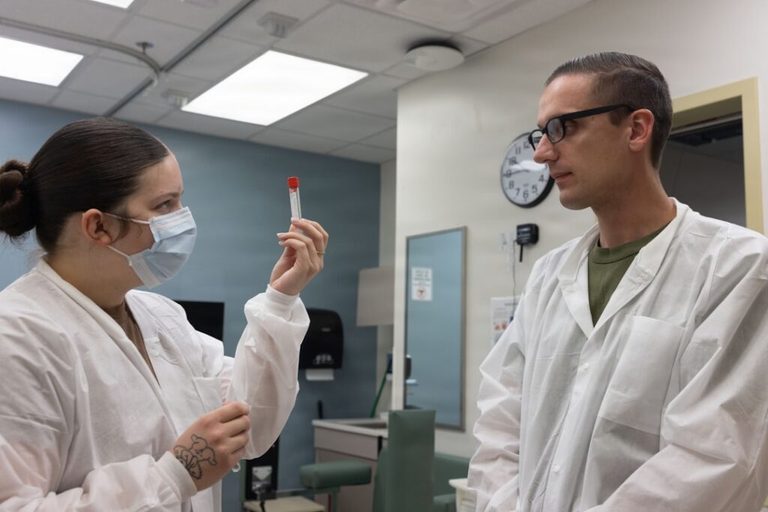
STI testing in women involves several methods depending on which infections are being screened. A cervical or vaginal swab is typically used for chlamydia and gonorrhea via nucleic acid amplification testing (NAAT), which is highly sensitive. Blood tests screen for HIV, syphilis, herpes (HSV-1 and HSV-2), hepatitis B, and hepatitis C. A urine sample can also detect chlamydia and gonorrhea when a pelvic exam isn’t performed.
A full STD panel for women generally includes:
- Chlamydia and gonorrhea (NAAT swab or urine)
- Syphilis (blood test, RPR or VDRL)
- HIV (blood or oral fluid, 4th-generation antigen/antibody test)
- Hepatitis B surface antigen and hepatitis C antibody (blood)
- Herpes simplex virus type 1 and type 2 (blood, if requested or indicated)
- Trichomonas vaginalis (swab or wet mount)
- HPV co-testing alongside Pap smear (for women 30 and older)
Not every panel includes every test by default. Herpes blood testing, for instance, is not universally recommended for asymptomatic patients because the results can be ambiguous and cause undue anxiety. Always ask your provider which infections are included and whether there are gaps based on your specific exposures.

What Screening Can and Can’t Catch: Knowing the Limits
Annual screening is powerful, but it’s not a guarantee. Window periods matter. HIV, for example, can take up to 45 days to show on a standard antibody test after exposure. Syphilis has a window of 3 to 6 weeks. If you’ve had a recent potential exposure, testing too soon may produce a false negative. Your provider should advise on timing and retesting.
Screening also doesn’t replace barrier methods or vaccination. The HPV vaccine, recommended through age 26 and available to some adults up to age 45, prevents infection from the strains most associated with cervical cancer and genital warts. Hepatitis B vaccination is effective and widely available. NIH research has confirmed that HPV vaccination dramatically reduces rates of cervical precancers, particularly when administered before first exposure. Combining vaccination, barrier methods, and regular screening is a stronger strategy than any single intervention alone.
“Early detection and treatment of STIs, before complications develop, remains the most cost-effective approach in STI prevention programs worldwide.”
What to Expect: Timeline and Results
Most STI test results come back within one to five business days depending on the lab and test type. Rapid HIV tests at a clinic can return results in 20 minutes. NAAT results for chlamydia and gonorrhea typically take two to three days. Syphilis serology takes a similar window. If results are positive, your provider will contact you to discuss treatment options.
Treatment timelines are generally short for bacterial infections. Chlamydia and gonorrhea are treated with antibiotics, often a single-dose regimen. Syphilis in its early stages responds well to a single penicillin injection. Viral infections like HIV and herpes are managed with antivirals rather than cured, but treatment options are effective and allow most people to live without complications. The key phrase is early treatment. The sooner an infection is identified, the simpler and more effective the response.
Practical Steps for Making Annual Screening Happen
Getting tested consistently is easier when you build it into your routine rather than waiting for a reason. Here’s how to approach it:
- Schedule it like an annual physical. Link your STI screening to another recurring appointment, your annual exam, your birthday, or a set calendar date, so it doesn’t get deprioritized.
- Tell your provider your full history. Be specific about the number of partners, types of sexual contact, and any prior STI diagnoses. Providers who don’t ask aren’t getting the full picture.
- Know what’s in your panel. Ask which infections are being tested and whether anything is excluded. Advocate for complete testing if your risk warrants it.
- Factor in window periods after new exposures. If you’ve had a recent potential exposure, ask your provider about timing for retesting to avoid false negatives.
- Don’t skip testing because you feel fine. Symptoms are not a reliable indicator of infection status. That’s the entire premise of routine screening.
- Keep records. Knowing your testing history helps you and future providers track patterns, identify gaps, and make better decisions over time.
Annual STI screening isn’t a concession to risk. It’s how sexually active women take ownership of their health in a clear-eyed, evidence-based way. The infections that cause the most long-term harm are the ones that get a head start because no one was looking. Don’t give them that head start. Schedule your next screening, ask for the tests that fit your actual life, and treat your sexual health as the ongoing priority it is, not something you revisit only when something feels wrong.